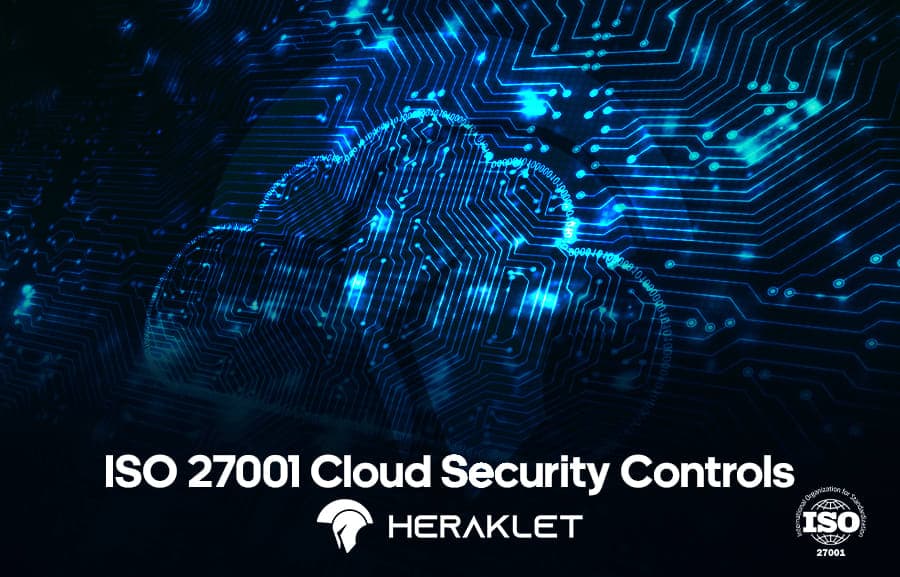
Cloud computing has transformed how organizations design, operate, and scale their information systems. However, cloud adoption also introduces new security risks related to shared responsibility, third-party dependency, and loss of direct infrastructure control. For this reason, ISO/IEC 27001 plays a critical role in structuring cloud security through risk-based governance and controls. This article explains ISO 27001 cloud security controls by focusing on how organizations should interpret and apply Annex A controls within cloud environments. The objective is to clarify responsibilities, control intent, and audit expectations in a technically sound and operationally realistic manner.
Cloud Security Within the ISO 27001 Context
ISO 27001 does not define cloud-specific requirements. Instead, the standard provides a technology-neutral framework that applies equally to on-premise, hybrid, and cloud environments. Therefore, organizations must interpret controls based on their cloud usage model.
Cloud security under ISO 27001 focuses on:
Risk ownership despite outsourced infrastructure
Control applicability within shared responsibility models
Supplier and service provider governance
Data protection across virtualized environments
As a result, ISO 27001 cloud security controls emphasize governance and accountability rather than platform-specific tooling.
Section summary:
ISO 27001 applies to cloud environments through risk-based interpretation rather than prescriptive cloud rules.
Shared Responsibility Model and Control Ownership
Cloud service providers and customers share security responsibilities. However, ISO 27001 assigns ultimate accountability to the organization that owns the information.
In practice:
Providers secure underlying infrastructure
Customers secure data, access, and configurations
Governance remains the customer’s responsibility
Therefore, organizations must clearly define which Annex A controls they implement internally and which controls rely on cloud provider assurances.
Section summary:
Shared responsibility does not transfer accountability under ISO 27001.
Risk Assessment as the Foundation for Cloud Controls
Risk assessment determines which ISO 27001 cloud security controls apply. Consequently, organizations must assess risks introduced by cloud deployment models.
Cloud-related risk factors include:
Multi-tenancy exposure
Data residency and jurisdiction
Dependency on provider availability
API and identity misconfiguration
Without proper risk assessment, cloud control selection becomes arbitrary.
Section summary:
Risk assessment drives meaningful cloud security control selection.
Governance and Organizational Controls for Cloud Security
Organizational controls establish governance over cloud usage. Therefore, ISO 27001 expects formal oversight of cloud services.
Key governance controls include:
Cloud usage policies
Defined approval processes for cloud services
Contractual security requirements
Supplier risk management
These controls ensure that cloud adoption aligns with organizational risk appetite.
Section summary:
Governance controls establish accountability and oversight for cloud services.
Identity and Access Management in Cloud Environments
Identity represents the primary security perimeter in cloud architectures. Consequently, access control plays a central role in ISO 27001 cloud security controls.
Key IAM considerations include:
Strong authentication mechanisms
Role-based access control
Privileged access management
Regular access reviews
Cloud platforms amplify access misconfiguration risks. Therefore, IAM governance becomes critical.
Section summary:
Effective identity and access management protects cloud environments from misuse.
Data Protection and Cryptographic Controls
Data protection remains a core ISO 27001 objective, regardless of hosting model. Therefore, organizations must apply cryptographic controls appropriately in cloud environments.
Key control areas include:
Encryption of data at rest
Encryption of data in transit
Secure key management
Control over encryption responsibilities
Cloud services may offer native encryption. However, organizations must retain control over key ownership decisions.
Section summary:
Cryptographic controls protect cloud-hosted data across its lifecycle.
Logging, Monitoring, and Cloud Visibility
Visibility challenges often increase in cloud environments. Therefore, ISO 27001 cloud security controls emphasize logging and monitoring.
Monitoring considerations include:
Centralized log collection
Cloud-native monitoring integration
Alerting for anomalous behavior
Retention of security logs
Without adequate visibility, incident detection becomes ineffective.
Section summary:
Logging and monitoring ensure control effectiveness and incident readiness.
Secure Configuration and Change Management
Cloud misconfigurations represent one of the most common security failure points. Therefore, ISO 27001 requires controlled configuration management.
Configuration controls include:
Baseline configuration standards
Secure default settings
Controlled change approval
Configuration drift monitoring
Automated infrastructure increases speed. However, governance must keep pace.
Section summary:
Secure configuration management reduces cloud exposure caused by misconfiguration.
Supplier and Cloud Service Provider Management
Cloud providers act as critical suppliers. Therefore, ISO 27001 requires formal supplier security governance.
Supplier-related controls include:
Security requirements in contracts
Review of provider certifications
Service level and availability commitments
Incident notification obligations
Organizations must not rely solely on provider marketing claims.
Section summary:
Supplier governance ensures trust and accountability in cloud services.
Incident Response in Cloud Environments
Incident response remains an organizational responsibility under ISO 27001. However, cloud environments introduce coordination challenges.
Cloud incident response must address:
Provider escalation procedures
Shared investigation responsibilities
Evidence collection limitations
Communication dependencies
Preparation ensures timely and controlled response.
Section summary:
Cloud incident response requires coordination and predefined escalation paths.
Business Continuity and Availability Controls
Cloud platforms often improve resilience. However, availability risks still exist. Therefore, ISO 27001 requires structured continuity planning.
Key continuity considerations include:
Dependency on provider regions
Backup and recovery strategies
Failover testing
Exit and portability planning
Cloud availability does not eliminate continuity planning responsibilities.
Section summary:
Business continuity controls protect cloud-based operations from disruption.
Annex A Interpretation for Cloud Security
ISO 27001 Annex A controls remain applicable in cloud environments. However, interpretation must reflect virtualized and outsourced infrastructure.
Common Annex A mappings include:
Organizational controls for governance
Technological controls for IAM and encryption
Physical controls through provider assurance
People controls through access and awareness
The Statement of Applicability documents these interpretations.
Section summary:
Annex A controls apply to cloud environments through contextual interpretation.
Audit Expectations for ISO 27001 Cloud Security Controls
Auditors assess how organizations manage cloud risks rather than how providers operate internally. Therefore, evidence focuses on governance and oversight.
Audit evidence may include:
Risk assessments covering cloud services
Contracts and SLAs
Access control configurations
Monitoring and incident records
Clear documentation simplifies audit outcomes.
Section summary:
Audits focus on control ownership and risk governance in cloud environments.
Common Cloud Security Control Weaknesses
Organizations frequently repeat similar mistakes when applying ISO 27001 to cloud environments.
Common weaknesses include:
Undefined shared responsibility assumptions
Overreliance on provider certifications
Weak identity governance
Insufficient logging
Addressing these weaknesses improves security posture significantly.
Section summary:
Awareness of common pitfalls strengthens cloud security control effectiveness.
Conclusion
ISO 27001 cloud security controls provide a robust and flexible framework for securing cloud environments through governance, risk management, and accountability. Rather than prescribing cloud-specific technologies, the standard focuses on control intent and responsibility. By performing structured risk assessments, defining shared responsibility clearly, and applying Annex A controls thoughtfully, organizations can secure cloud services effectively. Ultimately, ISO 27001 enables cloud adoption without sacrificing security discipline, auditability, or trust.

 WRITTEN BYMusa Toktaş
Musa Toktas is the Managing Director at Heraklet, a software engineering and R&D consultancy focused on aviation software and secure systems. His work centers on building and scaling certification-minded engineering practices for safety and compliance driven programs, including DO-178C software assurance, DO-254 hardware assurance, and the systems engineering and safety framework of ARP-4754A and ARP-4761. He also works on security governance and implementation for networked systems, covering secure architecture, risk management, and operational controls aligned with ISO 27001. Musa writes about reliable software delivery in regulated environments, verification and traceability, secure development practices, and designing resilient networked platforms.
More Stories fromMusa Toktas is the Managing Director at Heraklet, a software engineering and R&D consultancy focused on aviation software and secure systems. His work centers on building and scaling certification-minded engineering practices for safety and compliance driven programs, including DO-178C software assurance, DO-254 hardware assurance, and the systems engineering and safety framework of ARP-4754A and ARP-4761. He also works on security governance and implementation for networked systems, covering secure architecture, risk management, and operational controls aligned with ISO 27001. Musa writes about reliable software delivery in regulated environments, verification and traceability, secure development practices, and designing resilient networked platforms.